| Logicomix |
| Written by by Marjorie Senechal, MATHEMATICAL INTELLIGENCER | |
| Tuesday, 23 May 2006 15:45 | |
|
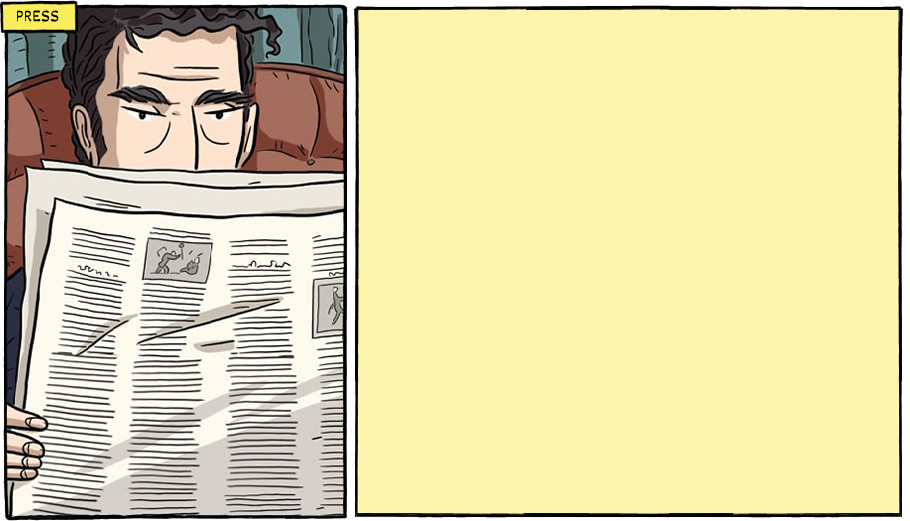
"We need to find new narrative forms for mathematics," Apostolos Doxiadis told the conference. Logicomix, a graphic novel by Doxiadis and Christos Papadimitriou with art by Alecos Papadatos and Annie di Donna, will tell the story of the twentieth-century foundational crisis in mathematics and the birth of modern computing. "The account stays very close to the true facts, with poetic license applied with discretion, and only in the service of narrative economy and the compression necessary to fit such an awesome, huge tale into a few hundred pages of sequential art." The term "graphic novel" was coined by Will Eisner in the 1960s to describe "a kind of comic book...aimed at more mature audiences". It became a household word after the publication of Maus, a story of a Holocaust survivor and his now-grown son told through cartoons and balloons. Unable to fit this literary sensation into any of its genre boxes, the 1992 Pulitzer Prize committee created a special award for author/cartoonist Art Spiegelman. Comics had come of age, and acquired a more dignified name. Ten "comics"-including one published in 1899-are logged on Alex Kasman's Internet list of mathematical fiction. But Logicomix, a sophisticated blend of human drama, history, and mathematics, demonstrates the seriousness of the medium and its power to convey not only a thrilling story but also character, context, and ideas. The central character is Bertrand Russell, philosopher, logician, eye-witness, and participant. Through him, we meet Hilbert, Frege, Cantor, Turing, and Gödel, among others. The authors guide us through the maze: "It is really the story of two friends, Apostolos and myself," Papadimitriou explains, "as they try to understand the lives and times and ideas of the remarkable people who developed mathematical logic-the science of rigorous reasoning-and to come to grips with the strange fact that so many of them died insane. It is also the story of the twentieth century, of its triumph and tragedy, of its conflicts and contradictions-intellectual and otherwise-of the ideas that defined it and propelled it to its strange destiny. And (in a twist that mimics the ways in which modern logic and computers gain their power by self-reference and introspection) it is the story of the book itself." Alecos Papadatos and Annie Di Donna traveled through Europe to study letters and photographs in archives to see the places and people they'd be drawing. At the Mykonos conference, Papadatos described the long road from photographs to pencil sketches to computer-enhanced frames, and the many technical issues involved in envisioning and creating the sketches and production images, a small sample of which appear on the following pages.
|
 Buy it Online
| Share:
Buy it Online
| Share:


